What Causes Chimney Brick Damage?
Chimney brick damage comes from moisture, freeze and thaw cycles, bad mortar, and poor waterproofing. Learn the warning signs and how to prevent spalling and cracking.




Based on 500+ Reviews

Proudly American
Owned & Operated

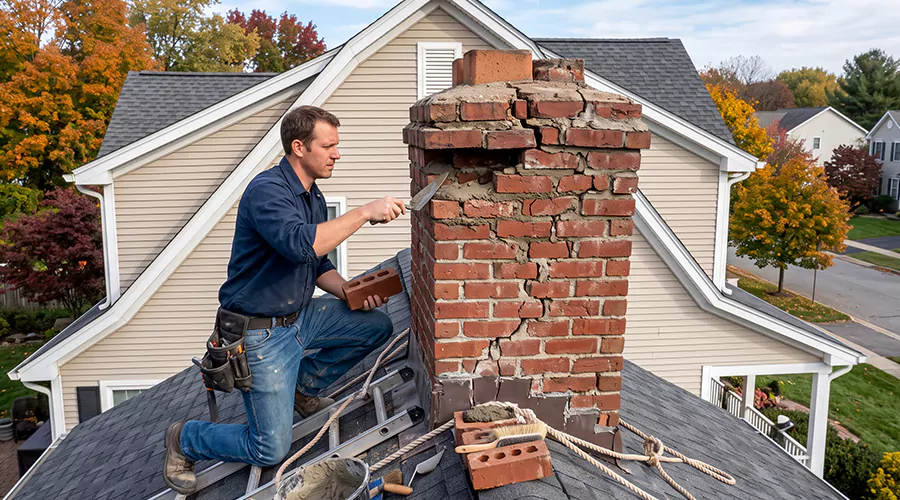
Chimney brick damage is a common problem that can affect the strength, appearance, and performance of a masonry chimney. Bricks and mortar are designed to withstand outdoor conditions, but constant exposure to moisture, temperature changes, and weather can gradually weaken the chimney structure.
Damaged chimney bricks should not be ignored because small cracks or surface deterioration can allow water to enter deeper into the masonry. Over time, this can lead to larger problems such as loose bricks, damaged mortar joints, leaks, and structural instability.
Understanding what causes chimney brick damage can help homeowners identify problems early and protect their chimney from further deterioration.
Chimney bricks are constantly exposed to outdoor elements, including:
Unlike many indoor structures, chimneys experience repeated heating and cooling cycles that can speed up material deterioration.
The most common causes of chimney brick damage include:
One of the biggest causes of chimney brick damage is moisture entering the masonry. Brick and mortar are porous materials, meaning they can absorb water over time. Regular soot removal can help reduce chemical exposure that worsens this damage.
Water can enter through:
Once moisture enters the bricks, it can weaken the structure from the inside.
Signs of moisture-related brick damage include:
Freeze and thaw cycles are one of the most damaging conditions for chimney bricks.
The process happens when:
Repeated freezing and thawing can cause:
This type of damage is known as spalling.
Mortar holds chimney bricks together and helps prevent water from entering the structure.
Over time, mortar can deteriorate because of:
Damaged mortar joints may appear as:
When mortar fails, water can enter deeper into the chimney and accelerate brick damage.
Masonry chimneys naturally absorb some moisture, but excessive water penetration can cause damage. Without proper waterproofing protection, bricks may absorb more water than they can handle.
Poor waterproofing can lead to:
A chimney waterproofing treatment can help reduce water absorption while allowing moisture vapor to escape.
The chimney crown protects the top of a masonry chimney and directs water away from the structure. A damaged crown can allow water to flow directly into the brickwork. This moisture can combine with creosote deposits, making chimney creosote cleaning necessary.
Common crown problems include:
Water entering through the crown can travel downward and damage chimney bricks over time.
Flashing protects the area where the chimney meets the roof. When flashing fails, water can enter around the base of the chimney.
Common flashing problems include:
Water from flashing failures can reach the chimney masonry and contribute to brick deterioration.
Like any exterior building material, chimney bricks can deteriorate over time.
Older chimneys may experience:
Aging materials combined with years of weather exposure can gradually reduce chimney strength.
Some brick damage begins because of construction problems.
Examples include:
Construction-related issues may cause premature deterioration even when the chimney is relatively new.
Chimney bricks can also be affected by chemical exposure.
Sources may include:
Certain chemicals can weaken masonry materials over time. Commercial chimney services can help address chemical-related damage in larger systems.
Chimneys are designed to handle heat, but extreme conditions can contribute to damage.
Potential causes include:
High temperatures can weaken bricks and mortar, especially when combined with existing moisture problems.
Homeowners should watch for warning signs such as:
| Sign | Possible Problem |
|---|---|
| Cracked bricks | Structural deterioration |
| Flaking brick surfaces | Spalling from moisture |
| Loose bricks | Mortar failure |
| Missing mortar | Water entry risk |
| White stains | Moisture movement |
| Leaning chimney | Structural concerns |
| Water leaks | Masonry or flashing problems |
Early identification can help prevent more extensive damage.
Brick spalling occurs when the outer surface of a brick breaks, flakes, or falls away.
It usually happens because:
Spalling can make bricks weaker and allow more moisture to enter.
Preventive maintenance can help extend the life of chimney masonry.
Helpful steps include:
Small maintenance tasks can help prevent larger masonry repairs.
Yes. The repair method depends on the severity of the damage.
Common repairs include:
| Damage Type | Repair Method |
|---|---|
| Small cracks | Masonry repair |
| Damaged mortar joints | Repointing |
| Individual damaged bricks | Brick replacement |
| Extensive deterioration | Chimney rebuilding |
| Water absorption issues | Waterproofing |
A chimney inspection can help determine the appropriate repair.
Small masonry repairs may appear simple, but chimney repair requires understanding:
Incorrect repairs can trap moisture or create additional damage.
Professional evaluation may be recommended when:
The cost depends on:
Minor repairs usually cost less than extensive masonry restoration or rebuilding. Repairing damage early can help avoid larger expenses later.
Chimney brick damage is commonly caused by moisture, freeze and thaw cycles, deteriorated mortar, poor waterproofing, damaged chimney components, aging materials, and construction issues. Because bricks and mortar protect the chimney structure from weather exposure, even small cracks or deterioration should be addressed before they spread.
Regular inspections, proper maintenance, and timely repairs help protect chimney masonry and extend the life of the entire chimney system.
Chimney bricks may crack because of moisture absorption, freeze and thaw cycles, aging materials, or structural stress.
Crumbly chimney bricks are often caused by water damage, spalling, and long-term weather exposure.
Yes. Repairs may include brick replacement, mortar repair, or rebuilding damaged sections.
Regular inspections, waterproofing, maintaining flashing, and repairing cracks early can help prevent damage.
Spalling is when brick surfaces crack, flake, or break apart because of moisture and freeze damage.
Yes. Cracks can allow water to enter deeper into the chimney and cause additional deterioration.
Chimney brick damage comes from moisture, freeze and thaw cycles, bad mortar, and poor waterproofing. Learn the warning signs and how to prevent spalling and cracking.
